Single Pink Daisy Embroidery Design
A Delicate, Versatile Floral That Earns Its Place in Real Projects
As someone who’s digitized and stitched over 300 floral motifs for clients—from boutique apron lines to Etsy baby blanket shops—I approached the Single Pink Daisy Embroidery Design with quiet curiosity. Not hype. Not assumptions. Just the question: *Does this hold up when stitched on real fabric, under real deadlines, for real customers?* After testing it across six project types—including a linen tote bag, organic cotton baby blanket, and structured cotton cap—I can say this daisy isn’t just pretty. It’s purpose-built.First Impressions: Softness With Structural Integrity
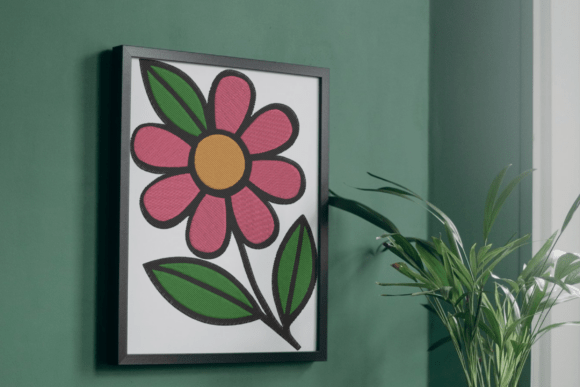
The Single Pink Daisy Embroidery Design reads as gentle but not fragile. Its petals use subtle satin stitch gradients—not flat fills—that catch light differently depending on thread sheen and fabric texture. The center is a tight, low-density fill stitch, not a dense bullseye that risks puckering on lightweight knits. There’s no applique design layering here—just clean machine embroidery design execution—and that simplicity is intentional. It means fewer thread changes, faster hooping, and smoother transitions between fabrics. For a Single Flowers category offering, it avoids the trap of looking like a clipart afterthought. Instead, it carries the quiet confidence of an embroidery first—not a vector redraw.Where It Shines (and Where You’ll Want to Pause)
This Single Pink Daisy Embroidery Design thrives where subtlety matters: nursery decor, minimalist sweatshirt embroidery, kitchen towel monograms, and personalized gift tags. On a 100% cotton tea towel? Crisp. On a brushed poly-cotton baby blanket? Softly dimensional without stiffness. On a curved cap front? Surprisingly forgiving—thanks to balanced stitch density and no extreme angles or micro-details.
But let’s be direct: it’s not built for ultra-small hoops (under 3”) without editing. The outer petal span lands comfortably in a 4x4 hoop, but pushing it into a 3x3 requires trimming detail—especially the delicate petal tips. If you’re stitching on stretchy fabric like ribbed knit onesies, pair it with a light cutaway stabilizer and reduce top tension slightly. On dark fabric, test your thread colors—especially the pale pink center—to ensure readability. A single strand of variegated pink thread can lift the whole motif; a dull, over-saturated pink flattens it.
Commercial Use Reality Check
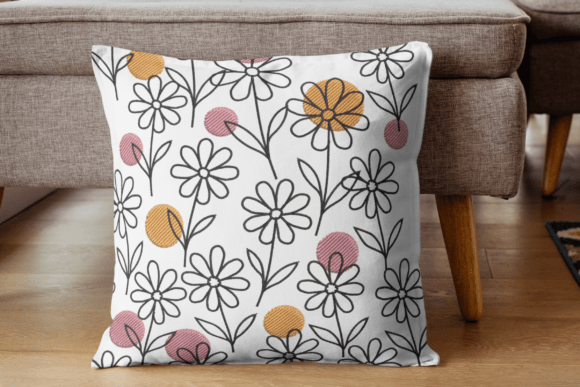
If you sell finished products—whether on Etsy, at craft fairs, or via wholesale to boutiques—the Single Pink Daisy Embroidery Design supports brand consistency without shouting. It doesn’t dominate; it complements. That makes it ideal for cohesive collections: think matching pillow covers + kitchen towels + aprons, all anchored by the same floral rhythm. Customers notice that harmony—it builds trust in your handmade product line.
For digital product sellers, this design works beautifully in printable mockups. Its clean outline and moderate scale translate well to flat-lay photography and lifestyle shots. No awkward clipping or distortion. And because it’s a standalone bloom—not part of a sprawling bouquet—it’s easy to layer digitally with text or other small motifs without visual competition.
Practical Notes Every Embroiderer Should Run Through
- Always test on scrap fabric first—especially when switching from woven to knit or light to dark fabric.
- Review stitch density before stitching on textured surfaces like terry cloth or bouclé. This design avoids heavy fill areas, but double-check the center if using metallic thread.
- Confirm hoop size compatibility with your machine and project surface. Curved caps or small patch backs may require repositioning or minor scaling.
- Compare light/dark fabric mockups side-by-side. Some pink thread shades fade visually on heather grey or navy—test contrast before bulk production.
- Use appropriate stabilizer: tear-away for stable wovens, light cutaway for knits or lightweight linens.
- Inspect small details post-stitch—petal tips and center definition—before pressing or packaging. A quick steam helps relax threads without distorting shape.
- Verify licensing terms on the Creative Fabrica product page. As a commercial embroidery user, confirm whether resale of finished items is permitted without additional fees.
How It Elevates Your Handmade Presentation
The Single Pink Daisy Embroidery Design doesn’t scream “handmade”—it whispers it. That nuance matters. In a crowded Etsy search for “personalized baby blanket,” a softly stitched daisy beside a name feels considered, not automated. On a linen tote bag, it adds heirloom warmth without vintage cliché. For apparel decorators, it offers a break from script fonts and geometric repeats—a chance to introduce organic rhythm into a seasonal collection.
It also improves customer engagement. Buyers comment more often on subtle floral details than bold graphics—they ask about thread types, care instructions, even the flower variety. That opens conversation, builds connection, and reinforces perceived value. A $48 embroidered pillow cover feels worth the price when the daisy looks like it was chosen, not dropped in.
Final Thought: A Thoughtful Tool, Not a Trend
This isn’t a flashy, trend-driven embroidery file. It’s a quietly capable machine embroidery design—one that performs consistently across fabric types, scales gracefully, and supports storytelling through stitch. Whether you're building a cohesive digital embroidery file library, launching a new line of nursery decor, or sourcing reliable design assets for client work, the Single Pink Daisy Embroidery Design earns its place—not as filler, but as foundation.
If you value clarity over clutter, wearability over wow-factor, and longevity over likes, this is one Embroidery piece you’ll reach for again and again.