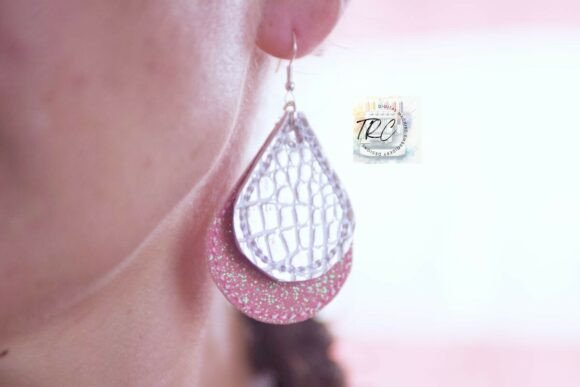
Earring ITH Machine Embroidery Design
First Impression: Modern, Minimal, and Market-Ready
As an embroidery designer who’s packed booths for 12+ craft fairs—and watched thousands of shoppers slow down at my table—my gut reaction to Earring ITH Machine Embroidery Design is immediate: this is a quiet standout. The title signals precision, efficiency, and wearability—not loud novelty, but confident craftsmanship. It reads as modern and minimal, with a subtle premium edge that aligns perfectly with today’s handmade buyer: someone who values intention over excess, quality over quantity. No “cute overload,” no “farmhouse clutter,” no forced whimsy. Just clean lines, intentional negative space, and the unmistakable appeal of something designed *to be worn*, not just displayed.
Where It Shines in Your Craft Fair Lineup
In a booth stacked with embroidered tote bags, aprons, tea towel sets, and fabric pouches, Earring ITH Machine Embroidery Design doesn’t compete—it complements. It’s the refined accent that elevates your entire offering. Customers scanning your table for giftable, personal, or boutique-worthy items will pause at earrings before they even notice your pillow covers. Why? Because wearable accessories command attention: they’re intimate, visible, and emotionally resonant. A pair of hand-embroidered earrings says “I made this *for you*”—not just “I stitched this on fabric.”
It performs exceptionally well as a small-shop product when applied to lightweight cotton twill, linen-blend backing, or even stabilized silk dupioni. As a finished product, it bridges the gap between digital embroidery file and tangible handmade product—ideal for Etsy sellers bundling with gift boxes, local boutiques seeking exclusive accessories, or pop-up vendors building curated collections. Unlike large-scale designs that dominate aprons or tote bags, this one invites closeness: shoppers lean in, hold it up to the light, compare thread colors, and imagine wearing it.
Real-World Production & Selling Practicalities
Yes—it stitches up quickly. But more importantly, it’s *easy to understand at a glance*. No nested layers, no ambiguous color stops, no confusing jump stitches. That clarity matters when you’re stitching 30+ pairs in two days before a fair. You can batch-produce cleanly across hoop sizes (confirm yours matches the design’s requirements), and the ITH format eliminates manual rehooping—critical when juggling multiple craft fair products like embroidered patches, market bags, and cap embroidery.
Photography? Exceptional. The design holds crisp detail even at 2x zoom in Etsy listings—no pixelation, no lost definition. Its scale works beautifully in printable mockups: flat-lay shots on marble, draped over velvet, styled beside handwritten tags. That visual consistency strengthens brand identity and builds trust with online buyers who can’t touch the texture firsthand.
Careful-Use Notes Every Designer Must Check
- Dense stitch areas: Inspect where metallic or satin elements converge—these can flatten on thick fabric or textured tea towels. Not ideal for apron embroidery unless simplified.
- Tiny details: Any fine loops or micro-hoops in the earring silhouette may blur on dark fabric or with low-contrast thread colors. Always test thread contrast on your base material.
- Hoop size & stabilizer: Confirm hoop size compatibility before cutting production runs. Use cutaway stabilizer for structure—especially if using lightweight backing fabrics common in commercial embroidery.
- Fabric texture matters: Avoid highly napped or ribbed surfaces (like terry cloth towels or heavy denim caps). Stick to smooth, stable weaves for best clarity.
- Small sizing risk: Scaling down below recommended dimensions sacrifices legibility. This isn’t a design that shrinks gracefully—it’s meant to be seen, not hidden.
How It Strengthens Your Booth & Brand
Earring ITH Machine Embroidery Design boosts visual appeal without overwhelming your display. Mounted on mini shadow boxes or hung from acrylic stands, it adds dimension and delicacy amid bolder items like embroidered tote bag designs or tea towel embroidery. It encourages interaction: customers ask questions, request customization, and often buy multiples (“one for me, one for my sister”). That drives average order value up—without discounting or bundling.
It reinforces handmade quality by showcasing technical control: precise registration, balanced tension, thoughtful thread selection. When paired with cohesive packaging—kraft boxes, branded tissue, hand-stamped tags—it communicates care at every level. For Etsy sellers and small shop owners, that perceived value justifies higher pricing and improves conversion rates. And because it’s repeatable, scalable, and fast-stitching, it fits seamlessly into your commercial embroidery workflow—no bottleneck, no burnout.
Embroidery Designer’s Final Checklist
- Test the design on scrap fabric matching your final product—don’t skip this step.
- Check thread contrast under natural and booth lighting; what looks neutral in daylight may vanish under warm market lights.
- Review spacing between elements—especially if pairing earrings with coordinating designs (e.g., tiny floral motifs on pouches).
- Confirm hoop size and required stabilizer type before bulk production.
- Inspect stitch density visually—dense fills need stronger stabilizer support than openwork.
- Create at least one real mockup: photograph it styled, handle it, wear it. Does it feel substantial? Does it drape right?
- Compare fabric colors side-by-side—light vs. dark, matte vs. sheen—to see how thread choices shift perception.
- Verify commercial licensing terms before selling finished products. This is non-negotiable for Etsy sellers and boutique makers.
Bottom line: Earring ITH Machine Embroidery Design isn’t just another embroidery file—it’s a strategic craft fair product. It balances speed with sophistication, simplicity with distinction, and digital precision with heartfelt handmade appeal. In a sea of samplers and oversized motifs, it’s the quiet piece that gets picked up, held, admired—and carried home.