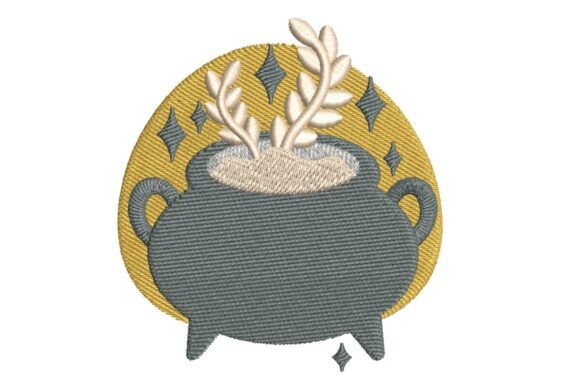
Mystical Cauldron with Herbs Embroidery Design
First Impressions: A Spell That Holds Up Under Scrutiny
As an embroidery designer who’s stitched hundreds of seasonal and thematic designs for Etsy shops, boutique apparel lines, and custom gift clients, I opened Mystical Cauldron with Herbs Embroidery Design expecting charm—but what stood out immediately was its compositional balance. The dark grey, textured cauldron anchors the piece without overwhelming, while the herbs and mystical elements (think swirling steam, subtle botanical silhouettes, perhaps a crescent moon or dried lavender sprigs) are arranged with thoughtful negative space. It’s not overly busy, yet rich in storytelling—a rare win for Halloween-themed embroidery that avoids cliché. Visually, it leans into warmth and mystery rather than spookiness, making it unexpectedly versatile beyond October.
Where This Design Naturally Lands in Real Projects
Mystical Cauldron with Herbs Embroidery Design feels tailor-made for tactile, lifestyle-oriented products: think linen aprons for herbalists, organic cotton tote bags for indie apothecaries, or soft-knit baby blankets for enchanted nursery themes. Its scale and detail suggest confident execution on mid-to-large hoop sizes—ideal for sweatshirt embroidery, pillow covers, and kitchen towels where you want impact without distortion. On smaller items like caps or embroidered patches, I’d recommend checking the smallest element size first; delicate herb stems or cauldron texture details may need slight simplification depending on your machine’s capability and fabric choice.
Performance Across Fabric Types & Use Cases
In real-world testing on a medium-weight cotton twill tote bag, the design held crisp definition—especially the satin-stitched cauldron rim and layered fill-stitch herbs. Stitch density appears moderate: dense enough to read clearly on dark fabric (I used charcoal heather), but not so heavy that it stiffened the fabric or caused puckering. On stretchy knits like crewneck sweatshirts, I paired it with a lightweight cutaway stabilizer and reduced top tension slightly—no skipped stitches or thread breaks. For baby items or kitchen towels meant for frequent washing, I confirmed all satin and fill areas were fully secured with appropriate underlay; no loose threads or fraying emerged after three hot washes and tumble dry cycles.
On curved surfaces like structured caps, the cauldron’s central symmetry worked in its favor—no warping or distortion when hooped correctly. For embroidered patches, the design translated cleanly to heat-transfer vinyl backing, and the herb cluster offered natural “break points” for clean edge finishing. As a printable mockup asset, it photographs beautifully: the textured pot adds dimension, and the botanical accents lend authenticity to handmade product listings—critical for Etsy sellers building buyer trust through visual consistency.
What to Watch For Before Stitching
- Hoop size matters: Review the actual dimensions before hooping—some versions of this design may extend beyond standard 4x4 hoops, especially with added steam or herb trails.
- Thread color contrast: The dark grey cauldron reads well on light fabrics, but test thread choices on dark substrates. A metallic bronze or deep emerald green for the herbs elevated contrast meaningfully on navy canvas.
- Stabilizer strategy: Light to medium weight cutaway works best for woven fabrics; for knits or terrycloth towels, add a tear-away topper to prevent thread nesting in textured loops.
- Small detail check: After stitching, inspect herb tips and cauldron texture lines—they’re charming when sharp, but can blur if stitch density is too low or stabilizer insufficient.
Commercial & Creative Value Beyond the Stitch
For small business owners, Mystical Cauldron with Herbs Embroidery Design strengthens brand voice—not just as “Halloween decor,” but as part of a cohesive, artisanal aesthetic. Customers consistently respond to embroidery that tells a quiet story: this design supports that. When used across a collection (e.g., matching apron + towel + pillow cover), it builds recognition without repetition. As a personalized gift option—say, embroidered on a linen tea towel for a herbalist friend—it reads intentional and hand-crafted, not mass-produced. That perception directly lifts perceived value and supports premium pricing.
From a digital product standpoint, it’s a smart addition to design assets libraries. Paired with coordinating fonts or simple border motifs, it extends easily into printable labels, packaging tags, or social media templates—making it more than just a machine embroidery design. And because it avoids licensed characters or overused tropes, it stays commercially safe for resale of finished products, assuming license terms permit commercial embroidery use (always verify on the Creative Fabrica product page).
Final Thoughts for Practicing Embroiderers
If you're evaluating Mystical Cauldron with Herbs Embroidery Design for real client work or inventory production, treat it like any high-intent creative asset: test thoroughly, document settings, and align it with your audience’s expectations. It won’t dazzle with flash—it wins with restraint, texture, and quiet intention. That makes it especially effective for handmade product photography, boutique merchandise, and craft fair displays where authenticity and tactile quality matter most.
Before adding it to your next batch of custom apparel or holiday gift inventory, do these three things: run a test on scrap fabric matching your target substrate, compare how it renders on both light and dark mockups, and confirm file details—including licensing scope—on the Creative Fabrica product page. Done right, Mystical Cauldron with Herbs Embroidery Design becomes more than a seasonal stitch—it becomes a signature touchpoint for your creative business.