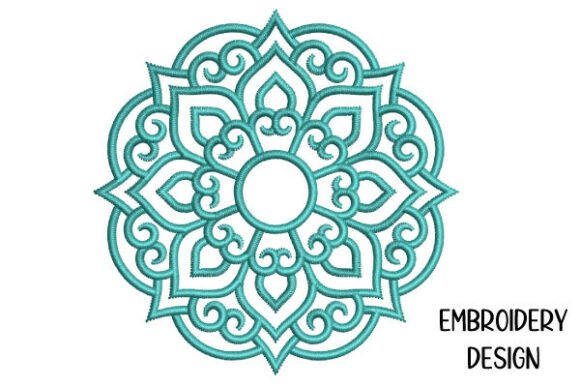
Mandala Embroidery – Satin Stitch 2
First Impressions: Ornamental, Calm, and Confidently Digitized
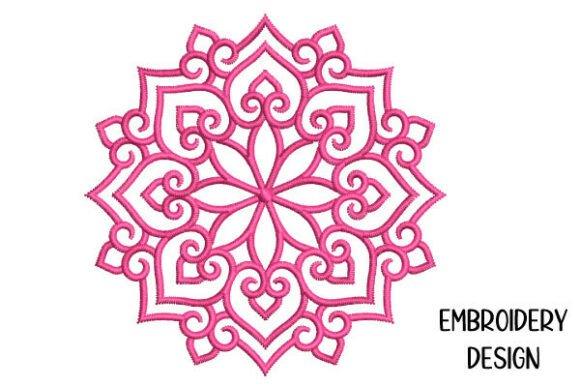
When I opened Mandala Embroidery – Satin Stitch 2, what struck me wasn’t just the symmetry—it was how quietly intentional it felt. This isn’t a busy mandala crammed with filler motifs; it’s a breathing composition of concentric curves, fine satin lines, and open negative space that lets fabric show through. The balance between ornamental flow and clean execution tells me this was digitized by someone who understands both aesthetics *and* stitch behavior—not just how it looks on screen, but how it lands on cloth. It reads as meditative, not fussy—ideal for projects where handmade warmth matters more than flash.
A Real-World Test: Stitching It on a Linen-Cotton Tote Bag
Last week, I used Mandala Embroidery – Satin Stitch 2 on a natural linen-cotton blend tote for a small boutique launch. I chose the larger size (since the description confirms two sizes, I confirmed dimensions before hooping) and paired it with matte cotton thread in soft charcoal. On the bag’s slightly nubby surface, the satin stitch held its sheen without glare—no pooling, no skipped stitches—and the curves stayed smooth, even at the outermost rings. Customers paused to trace the shape with their fingers. That tactile response? That’s when you know a design works beyond the hoop.
Where It Shines (and Where It Asks for Care)
Mandala Embroidery – Satin Stitch 2 performs beautifully on stable, medium-weight textiles: pillow covers, tea towels, aprons, baby blanket corners, and sweatshirt yokes. Its open structure avoids heavy fill stitch density, so it breathes well on cotton knits and doesn’t overwhelm lightweight chambray or quilting cotton. It’s especially effective as a focal point—centered on a tote, nestled above a pocket on a denim jacket, or framed in an embroidery hoop for nursery wall art.
But it does ask for thoughtful placement. On highly textured fabrics like bouclé or thick terry cloth, the fine satin lines can blur—test first. On stretchy fabric (think baby onesies or performance tees), use cutaway stabilizer and reduce top tension slightly to prevent puckering around those delicate curves. Avoid placing it near seams or curved surfaces like cap crowns unless you’ve tested the distortion—those outer rings will warp if the base fabric shifts mid-stitch. And while it reads clearly on light fabric, on deep navy or charcoal, confirm your thread color offers enough contrast; satin stitch loses definition fast when values are too close.
What It Adds to Your Finished Product—Beyond Pretty
This isn’t just decoration—it elevates perception. A customer holding a pillow embroidered with Mandala Embroidery – Satin Stitch 2 doesn’t just see a pattern; they feel intention, calm, and craftsmanship. That translates directly to perceived value—especially for Etsy sellers and boutique owners pricing handmade goods. For personalized gifts (baby blankets, wedding guest towels, holiday hostess totes), it signals care, not mass production. And because it’s balanced—not too dense, not too sparse—it photographs cleanly for digital listings, printable mockups, and social previews. No need to over-edit. It arrives ready to represent your brand voice: grounded, mindful, and quietly refined.
Design Notes Every Embroiderer Should Check Before Stitching
- Test on scrap first—especially if using textured, dark, or stretchy fabric. Satin stitch behaves differently across fiber content.
- Confirm hoop size compatibility. With two sizes offered, verify which fits your standard hoop and whether the smaller version retains clarity at reduced scale.
- Review stitch density visually. Zoom in on the file preview—look for overlapping satin columns or overly tight turns that could cause thread breaks on long runs.
- Inspect small details. Those inner loops and connecting stems should be at least 1.5mm wide to avoid fraying after washing or wear.
- Try black-and-white mockups. If you’re listing digitally, convert a preview to grayscale—does the rhythm and hierarchy still read?
- Match stabilizer to end use. Tear-away for tea towels, cutaway for baby items, and lightweight fusible for apparel that will be washed often.
- Verify licensing. Since this is a digital embroidery file intended for commercial use, confirm whether resale of finished products is permitted—and whether attribution or license renewal applies.
Why It Fits Seamlessly Into Real Creative Workflows
As a designer who ships custom embroidery files to craft businesses and develops product lines for small shops, I appreciate how Mandala Embroidery – Satin Stitch 2 bridges versatility and personality. It’s not so niche it limits your audience (like ultra-specific seasonal themes), nor so generic it blends into background noise. It supports multiple narratives: wellness branding, modern nursery styling, slow-living merchandise, or artisanal gifting. For an Etsy seller launching a line of embroidered kitchen linens, it’s a strong anchor design. For an apparel decorator building a capsule collection of unisex sweatshirts, it adds quiet distinction without shouting. And for a hobbyist making holiday gifts? It feels special without demanding expert-level technique.
Final Thought: A Design That Respects Both Maker and Wearer
Good embroidery design doesn’t just fill space—it holds attention, invites touch, and survives real life. Mandala Embroidery – Satin Stitch 2 does that. It’s calibrated for clarity, built for stability, and designed with the understanding that every stitch ends up on something someone loves, uses, and keeps. Whether you’re stitching one for a friend’s baby shower or scaling it across fifty tote bags for your shop launch, it carries weight without heaviness. That balance—between detail and durability, beauty and function—is rare. And it’s why I’ll reach for it again.